
monuments
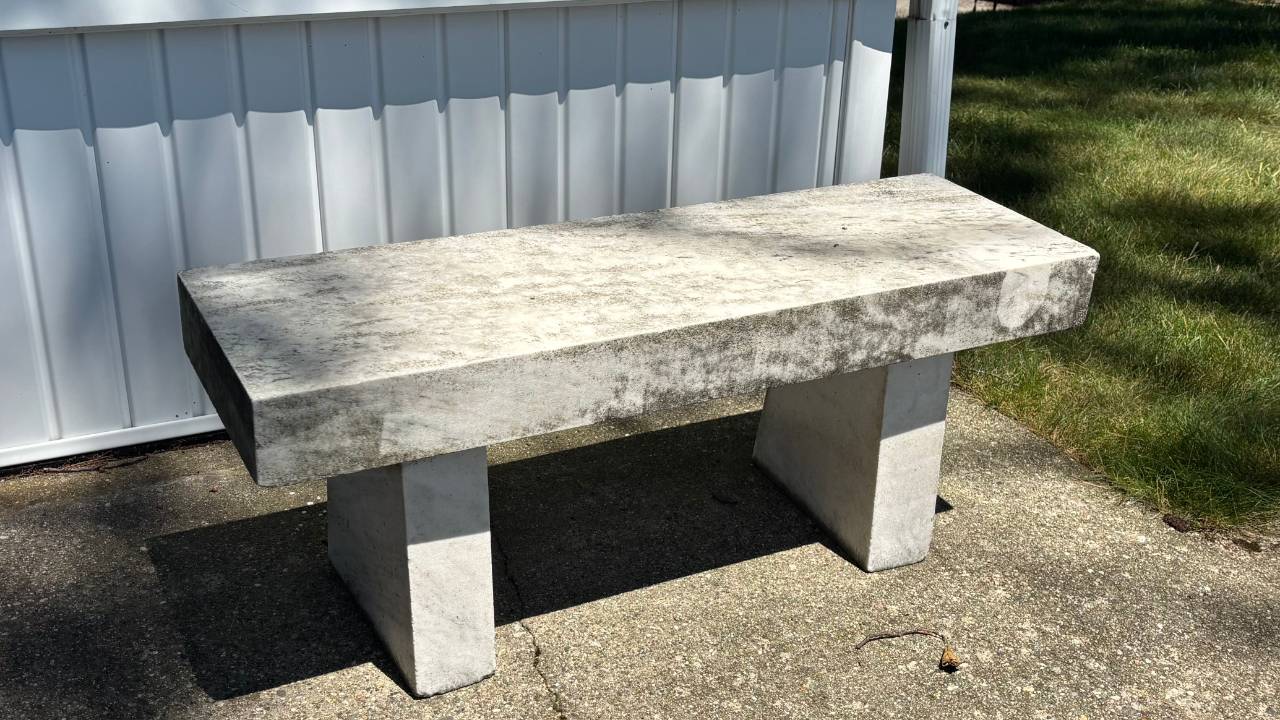
Last week I sent a marble bench off to a monument company to be cleaned and polished and engraved with the names of my husband and myself for our plot in the local Ludington cemetery. I have a special affinity for cemeteries. I find them peaceful and full of history. I have long thought that I would like my gravestone to be a bench where people could sit and reflect, not just on my life, but on the topic of mortality more generally.
We are here such a little while…four score and ten if we are lucky. Within another four score and ten, almost everyone who ever knew us will also be dead. For some of us the only reminder that we were ever here at all will be our tombstones.
Frankly, that doesn’t bother me. I don’t need my name on buildings, and I am suspicious of those who are preoccupied and obsessed with monuments and naming rights. I’ve donated to community projects like a brick walkway in Epworth Heights and a patio at Descanso Gardens in California. We even donated to the restoration of CS Lewis’ home The Kilns in Oxford. But most of the time, we ask to have someone else’s name put on the brick, the plaque or the wall…we have our children’s and grandchildren’s names memorialized, or even our parents or grandparents. Only once have we let our name be emblazoned on the wall of a theatre lobby, and it embarrasses me.
In the Bible narrative, Samuel memorialized the victory of the Israelites over the Philistines by setting up a stone, an Ebenezer, not named for a particular person, but as a way of saying, “Thus far the Lord has helped us.” (1 Samuel 7:12.) As a matter of fact, I can’t think of one monument in the Bible that was named for an individual.
Wait, I’m wrong about that. Absalom, the rebellious son of King David set up a pillar in the King’s Valley, naming it “Absalom’s Monument.” You might remember that Absalom’s story didn’t end well. Likewise, King Saul set up a monument for himself at Carmel in 1 Samuel 15:12 after a successful military campaign against the Amalekites. But Saul is remembered as a fearful nut job.
Unlike surrounding ancient cultures that built grand statues honoring mortal heroes, the standing stones of Biblical people most often declared and commemorated the work of the Lord. Perhaps there is a message there for our current politicians.
In Shakespeare’s famous oration by Marc Antony he wrote, “The evil that men do lives after them; the good is oft interred with their bones.” Being remembered with one’s name on buildings and arches may not be all it’s cracked up to be. Such monuments may be reminders to the vanity and self-serving nature of a man rather than his humility and service to his country.
Love, Liz
“Let each one be careful how he builds…each one’s work will be shown for what it is…it will be revealed by fire—the fire will test the quality of each one’s work. If the work someone has built on the foundation survives, he will receive a reward; if it is burned up, he will have to bear the loss.” 1 Corinthians 3:10-15
